Center for Peace and Transcultural Communication
Building Peace Through Transcultural Dialogue
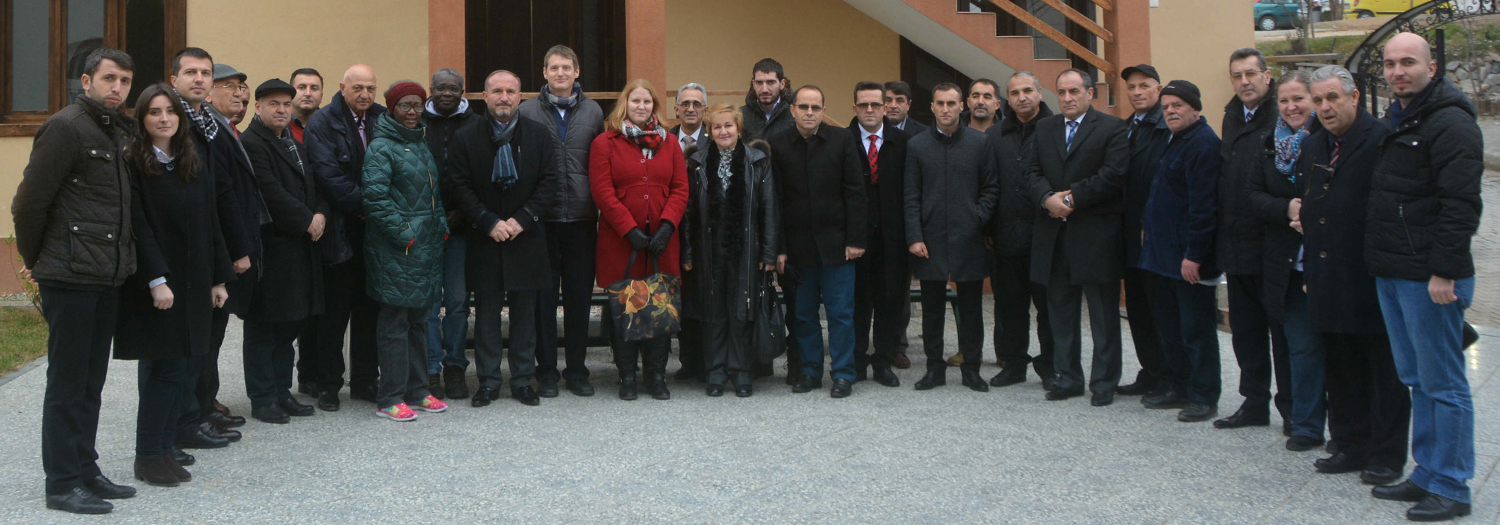
Building on a long-standing partnership between Northern Illinois University and the University of Tetova, the NIU–UT Center for Peace and Transcultural Communication serves as a collaborative hub where faculty, students and community leaders explore how education, communication and civic engagement can strengthen democratic societies across diverse cultural contexts.
A signature initiative of the center is the international edited volume, "Peace as a Transcultural Language: From Global Agendas to Local Realities." Bringing together scholars and practitioners from North Macedonia, the United States and beyond, the volume examines how peace is translated into local practice through education, public discourse, governance, community participation and democratic engagement. The center is also planning a companion conference, "Peace as a Transcultural Language," with the publication and conference anticipated in late 2026.
The project reflects the partnership's commitment to scholarly excellence and international collaboration through a reciprocal peer-review process involving faculty from both universities. Led by co-editors-in-chief Vullnet Ameti, Lisa C. Freeman, Eric Junco and Donika Kamberi, the initiative advances the center's broader mission of fostering cross-cultural understanding, collaborative research and meaningful dialogue.
Through faculty exchanges, research partnerships, conference programming and student engagement, the NIU–UT Center for Peace and Transcultural Communication continues to build an international community dedicated to advancing peace, strengthening democratic participation and creating a lasting impact in local and global communities.
Peace as a Transcultural Language: From Global Agendas to Local Realities
Our edited volume explores how global commitments to human rights, democracy and peacebuilding are translated into local practice through education, governance, public communication and civic engagement.
Drawing on the expertise of scholars and practitioners from NIU, the University of Tetova and partner institutions, the volume examines how language, narrative and inclusive participation can strengthen democratic institutions and foster sustainable peace across diverse cultural and political contexts. Through interdisciplinary perspectives and practical examples, we offer a framework for understanding peace as a shared transcultural practice and highlights adaptable approaches that can inform communities around the world.
Editorial Leadership: Co-Editors-in-Chief
- Vullnet Ameti, Ph.D., University of Tetova
- Lisa C. Freeman, Ph.D., Northern Illinois University
- Eric Junco, Ed.D., Northern Illinois University
- Donika Kamberi, Ph.D. candidate, University of Tetova
Northern Illinois University Review Board
- Mary Earick, Ph.D., Dean, College of Education
- Bradley Bond, Ph.D., Associate Professor, History
- Carolyn Pluim, Ph.D., Associate Dean, College of Education
- Anthony Preston, Ph.D., Assistant Dean, College of Business
- Patrick Roberts, Ph.D., Professor, Foundations of Education
University of Tetova Review Board
- Kushtrim Ahmeti, Ph.D., Rector
- Donika Kamberi, Ph.D. candidate, Law
- Agon Memeti, Ph.D., Professor, Computer Science
- Ibrahim Neziri, Ph.D., Professor, Philosophy
- Teuta Ramadani-Rasimi, Ph.D., Assistant Professor, Special Education and Rehabilitation